www.flickr.com
Custom Search
Deika Morrison

Deika Morrison: Reasoning the Reasons

Grab this Headline Animator

Deika Morrison: Financial Security Tips+Tools

Grab this Headline Animator

Monday, March 16, 2009

What Are They Thinking? AIG Is A Disaster.

American International Group, Inc.Image via Wikipedia

Ok, I don't need to post a link to an article. The WHOLE WORLD knows about this one. There has actually been a debate for days- yes days - over this AIG bonus matter.

I need to know what "they" are thinking. But the key question is who are the "they"

First, at the risk of being controversial, who are the "they" that agreed to these contracts in the first place. It has been raised that these contracts were actually entered into after - yes, after - AIG received the first set of bailout funds. Please tell me that it is not so. Because this would mean that after that public outcry, someone actually developed and signed these contracts knowing taxpayers money would be paying for this. Do these "they" have no conscience?

Second, if the taxpayers own 80% of AIG, is that not partial nationalization? I have already spoken and written several times about why partial nationalization is such a disaster. This is exactly why. Case in point. Those in charge get to spend taxpayers money as they like. Fully nationalize and cut out this nonsense.

Third, excuse me, but these are contracts. And if they are contracts, then evidently there are obligations. The American way of capitalism is all about honoring contracts, so I get that. So where were the "they" to make these contracts null and void if government assistance is provided? That is called a "conditionality" - quite another popular feature of the American way of capitalism. Ben Bernanke, please add this to your list for regulatory reform.

Fourth, and here's where I must be missing something. Am I really to understand that derivatives traders - the same "they" who caused this massive mess not just to the AAA rated AIG, but to the entire global financial system - are the "they" who MUST get bonuses, and that these "they" actually want them? Do they live in society with the rest of us? You know, I said that Wall Street was in desperate need of PR. Strike that. All these companies need an entire machinery to explain this NEED for this type of compensation system when 1) people do not perform and 2) when people make a mess of the entire world. I am sorry but us mere mortals do not get it. Because in our world, if we mess up we get no bonus or we get fired. And in our world when those "they" make a mess of the world, we in the rest of the world lose our jobs because of those "they" and we wonder how we are going to literally survive this period. Earth to AIG: The majority of the world wonders where their next meal comes from. Where are the sanctions for making a mess? Ben Bernanke, you need this one on your list too.

AIG and its employees need to get a grip. Nothing lasts forever. We all live in this world. If your customers, clients, target market, regulators and all the people you do business with absolutely abhor you and your practices, not only will the company not last, but all your employees will become unemployable. Respectfully, these "they" are not team players.

Reblog this post [with Zemanta]

Saturday, March 14, 2009

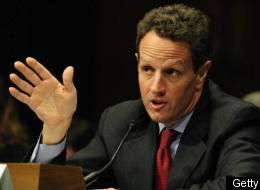
Geithner: Global Financial Crisis "Still Evolving"


Crisis is "still evolving"? Thank you Christopher Columbus.

Read the Article at HuffingtonPost

According to AP:

"They (the G20) aren't waiting patiently. Brazilian Finance Minister Guido Mantega said there is an "urgency" for the U.S. to solve its banking problem.

"If they're going to be nationalized then go ahead, if they are going to be liquidated then go ahead. But it must be done quickly," he said after the Saturday meeting."

I have written and said a thousand times - just get on with it. Do something.


Reblog this post [with Zemanta]

Friday, March 13, 2009

When China Gets Worried, I Get Worried

BEIJING - MARCH 16:  Chinese Premier Wen Jiaba...Image by Getty Images via Daylife

See Yahoo News: China "worried" about US Treasury Holdings

If China is worried, it's time to start looking at this whole matter again.

According to the article: "Of course we are concerned about the safety of our assets. To be honest, I'm a little bit worried," Wen said at a news conference Friday after the closing of China's annual legislative session. "I would like to call on the United States to honor its words, stay a credible nation and ensure the safety of Chinese assets."

"Worried". Premier Wen Jiabao said "worried"

I haven't been worried precisely because China had money, and China was willing to lend the US money. Everywhere else is in a mess, other countries haven't really been trying to help the US and other countries don't have the kind of money China has. It took forever for the G7 to have the first meeting. And since then, Europe has its own internal difficulties - can't agree on form of assistance to its own Eurozone members, amount of assistance etc.

If China is worried, then China is unlikely to keep lending. That is logical. It's worried about the existing assets. Where will the US turn to next?

We may just see a new world order, and a completely new monetary system. WOW!

I have noted China's statements on the need for the G20 to focus on the developing world and the poorest countries in the meeting in April.

From the article:

"Wen also said Beijing wants the G-20 summit in April focus on helping the poorest countries.

The premier said Beijing has met its own commitments to help developing countries by erasing a total of $40 billion in debt owed by 46 countries and giving out 200 billion yuan ($29 billion) of aid to developing countries."

"We must see to it that we show concern for developing countries," he said.

THANK YOU CHINA!! But let's face reality, if the US cannot stabilize that is bad news for all of us. And the US needs China's help - in more than money - to stabilize.

America, the ball is in your court. Ben Bernanke says all you need is the will. Do you know what to do, like he says? Because clearly, you have not yet fully appreciated what is at stake if you do not - or you would have done it. And here's a gentle reminder - what is at stake is much more than China not lending you money, should that be the outcome.

This is really going to be interesting.


Reblog this post [with Zemanta]

Jon Stewart Deserves An Award. Watch This!

Host Jon Stewart in the studio of The Daily ShowImage via Wikipedia

Remember my post a few days ago: A Plea To Jon Stewart? Well, now, Jim Cramer from CNBC was his guest last night. Please take the time to watch the videos. It's not long - it's just in three parts.

Jon Stewart deserves an award! And this is exactly what I want Jon Stewart to do with the ratings agencies. Remember my posts: Another Look At Ratings Agencies. and Rating The Ratings Agencies. Today, the Jamaica Observer ran a fantastic piece Should Jamaica Continue To Place Faith In the Ratings Agencies? Another worthwhile read.

I wish Jon Stewart would ask these ratings agencies the same kind of common sense, public interest "don't we deserve better" kinds of questions. Let's have some more admissions of guilt and responsibility. And let's get a pledge to do better.


By the way, in my post My Wish List - The New Global Financial Architecture, I mentioned a "grownup" body to keep an eye on everyone else. Remember?

7. In my ideal world, we have a "grownup" - a super stablizer body comprised of membership from the developed and the developing world. How do I explain this? We cannot go through this again. We need some "body" whose job it is to keep an eye on everyone else. Not a regulator, but some kind of independent watchdog group. Maybe the media can form a partnership with some prominent NGOs. Maybe we should start a new NGO. Whatever or whoever, but here's what this body must do:
  • Some "body" to make sure all the powerful people and parties do not abuse their power - and expose them if they do
  • Some "body"to make sure mandatory financial education is taking place, and if it is not, then expose that
  • Some "body" to make sure the foundation is funded and is funding what it is intended to fund, and expose the financial sector if it does not make it's donations, and expose the foundation if it is not doing what it should
  • Some "body" to make sure the free for all is over, and expose anyone getting back into the reckless behavior with no limits, no or limited audits, no or limited regulation, no or limited transparency, no or limited supervision
  • Some "body" to make sure the universities lead the design of this stronger, more stable, more equitable and more sustainable global financial and economic system, and expose them if they get off track
  • Some "body" to make sure domestic regulators are keeping their commitments with regard to the treaties, and expose them if they don't
Well, I nominate Jon Stewart to sit on that board.


Reblog this post [with Zemanta]

Wednesday, March 11, 2009

Will You Help The Huffington Post And Me?

HelpImage by LiminalMike via Flickr

Ok, would you like to help with a very important project?

The Huffington Post is asking for your help. This is the article: Help Dig Up The Praise That Today's Bailout Bandits Once Received

Basically, they are asking you to submit "heaps of praise that newspapers, magazines and TV news shows doled out when times were good. Now that times are bad, it's even more important to remind ourselves how easily the wool can be pulled over the media's eyes and, consequently, those who consume it." Read the article for some suggested names.

According to the article:
"Email submissions+praise@huffingtonpost.com with the articles you find. Include your name, the date the article was published, and let us know if you would like to remain anonymous. "

Now, why is this an important project? Because I love the media so much - not being sarcastic - that whenever they are used to dupe us, those offenders should be exposed. Also, because I know that you should always question your information - still love the media - it's good for us to see that everything we see, read or hear is not necessarily the truth, the whole truth, and nothing but the truth.

Thanks to the Huffington Post for this excellent idea.

So now I ask you, my readers, do you want to do something for me - for us all?


Please email earnandsavenow@gmail.com with all published incidents (with date and source) of every incident you find when the ratings agencies were wrong. I have already filed away their testimony by the House Oversight Committee on October 22, 2008. If you want a quick reminder of why I care so much about this issue, see my recent post: Another Look At The Ratings Agencies and my earlier post: Rating The Rating Agencies. And just to remind you of the urgency, Moody's has now come out with 283 companies they say are at risk of default. Well, if they weren't before - this publication from Moody's won't help. And this is the precise problem, they have been wrong in the past, but people base their decisions based on whatever these rating agencies say anyway.

Maybe if I gather the information for Jon Stewart, he'll do the piece on the ratings agencies I've made the plea for. (See my blog post: A Plea To Jon Stewart)
Reblog this post [with Zemanta]

Tuesday, March 10, 2009

President Obama, Congress, G20 - Are You ALL Listening?

Ben Bernanke, chairman of the Board of Governo...Image via Wikipedia

Yesterday, I outlined My Wish List - The New Global Financial Architecture. If you missed it, I outlined 7 features of the reformed financial sector - in my ideal world.

So today, as luck would have it, Ben Bernanke gave a speech entitled "Financial Reform to Address Systemic Risk" His best speech yet! Spot on with the Q & A!

I can't debate the usefulness of TARP since I don't have enough information to do so. BUT, with regard to moving forward, I think we are of complete like mind. I may be a bit harsher, though. :)

Here is my one minute interpretation of what he said:
  • he has explained why "too big to fail" is a disaster, and what to do about it;
  • he has outlined why a holistic approach - with maximum international cooperation - to regulation is required;
  • he has endorsed reform of accounting standards and other requirements that encourage bank behavior that exacerbates the problem and
  • he has called for a "super-investigator" of sorts - an agency that is charged with looking for systemic risk in particular recognizing that a fragmented regulatory system cannot catch everything. This agency really just identifies the problems so we can head them off. Some other body or bodies take care of problems.
  • there is NO economic recovery without fixing the banking system - he said it in the speech and more than once in the Q&A
  • the best thing the G20 can do is develop guidelines for cooperation - agreements and so forth. I did not hear one word about any global regulator which some countries have proposed.
Bottom line: the US knows what to do, there needs to be the will to do the things they know need to be done. Check the Q&A. That was his answer.

My questions: When, Chairman Bernanke? We need this like, yesterday! I hear you that you are doing what you can, and there are things that Congress must do, and there are things the Administration must do, and there are things the G20 must do. So, President Obama, Congress and the G20 - are you ALL listening?

If you missed the speech, here is the video compliments of CSPAN. I would recommend that you watch it because then you get the benefit of the Q&A which is particularly insightful, especially if you are trying to understand how all these pieces fit together.

Or here's the link to the speech compliments of the Federal Reserve website

Or from the Federal Reserve website. Anything in bold is my emphasis:

"Chairman Ben S. Bernanke
At the Council on Foreign Relations, Washington, D.C.
March 10, 2009

Financial Reform to Address Systemic Risk

The world is suffering through the worst financial crisis since the 1930s, a crisis that has precipitated a sharp downturn in the global economy. Its fundamental causes remain in dispute. In my view, however, it is impossible to understand this crisis without reference to the global imbalances in trade and capital flows that began in the latter half of the 1990s. In the simplest terms, these imbalances reflected a chronic lack of saving relative to investment in the United States and some other industrial countries, combined with an extraordinary increase in saving relative to investment in many emerging market nations. The increase in excess saving in the emerging world resulted in turn from factors such as rapid economic growth in high-saving East Asian economies accompanied, outside of China, by reduced investment rates; large buildups in foreign exchange reserves in a number of emerging markets; and substantial increases in revenues received by exporters of oil and other commodities. Like water seeking its level, saving flowed from where it was abundant to where it was deficient, with the result that the United States and some other advanced countries experienced large capital inflows for more than a decade, even as real long-term interest rates remained low.

The global imbalances were the joint responsibility of the United States and our trading partners, and although the topic was a perennial one at international conferences, we collectively did not do enough to reduce those imbalances. However, the responsibility to use the resulting capital inflows effectively fell primarily on the receiving countries, particularly the United States. The details of the story are complex, but, broadly speaking, the risk-management systems of the private sector and government oversight of the financial sector in the United States and some other industrial countries failed to ensure that the inrush of capital was prudently invested, a failure that has led to a powerful reversal in investor sentiment and a seizing up of credit markets. In certain respects, our experience parallels that of some emerging-market countries in the 1990s, whose financial sectors and regulatory regimes likewise proved inadequate for efficiently investing large inflows of saving from abroad. When those failures became evident, investors lost confidence and crises ensued. A clear and highly consequential difference, however, is that the crises of the 1990s were regional, whereas the current crisis has become global.1

In the near term, governments around the world must continue to take forceful and, when appropriate, coordinated actions to restore financial market functioning and the flow of credit. I have spoken on a number of occasions about the steps that the U.S. government, and particularly the Federal Reserve, is taking along these lines.2 Until we stabilize the financial system, a sustainable economic recovery will remain out of reach. In particular, the continued viability of systemically important financial institutions is vital to this effort. In that regard, the Federal Reserve, other federal regulators, and the Treasury Department have stated that they will take any necessary and appropriate steps to ensure that our banking institutions have the capital and liquidity necessary to function well in even a severe economic downturn. Moreover, we have reiterated the U.S. government's determination to ensure that systemically important financial institutions continue to be able to meet their commitments.

At the same time that we are addressing such immediate challenges, it is not too soon for policymakers to begin thinking about the reforms to the financial architecture, broadly conceived, that could help prevent a similar crisis from developing in the future. We must have a strategy that regulates the financial system as a whole, in a holistic way, not just its individual components. In particular, strong and effective regulation and supervision of banking institutions, although necessary for reducing systemic risk, are not sufficient by themselves to achieve this aim.

Today, I would like to talk about four key elements of such a strategy. First, we must address the problem of financial institutions that are deemed too big--or perhaps too interconnected--to fail. Second, we must strengthen what I will call the financial infrastructure--the systems, rules, and conventions that govern trading, payment, clearing, and settlement in financial markets--to ensure that it will perform well under stress. Third, we should review regulatory policies and accounting rules to ensure that they do not induce excessive procyclicality--that is, do not overly magnify the ups and downs in the financial system and the economy. Finally, we should consider whether the creation of an authority specifically charged with monitoring and addressing systemic risks would help protect the system from financial crises like the one we are currently experiencing. My discussion today will focus on the principles that should guide regulatory reform, leaving aside important questions concerning how the current regulatory structure might be reworked to reduce balkanization and overlap and increase effectiveness. I also will not say much about the international dimensions of the issue but will take as self-evident that, in light of the global nature of financial institutions and markets, the reform of financial regulation and supervision should be coordinated internationally to the greatest extent possible.

Too Big to Fail
In a crisis, the authorities have strong incentives to prevent the failure of a large, highly interconnected financial firm, because of the risks such a failure would pose to the financial system and the broader economy. However, the belief of market participants that a particular firm is considered too big to fail has many undesirable effects. For instance, it reduces market discipline and encourages excessive risk-taking by the firm. It also provides an artificial incentive for firms to grow, in order to be perceived as too big to fail. And it creates an unlevel playing field with smaller firms, which may not be regarded as having implicit government support. Moreover, government rescues of too-big-to-fail firms can be costly to taxpayers, as we have seen recently. Indeed, in the present crisis, the too-big-to-fail issue has emerged as an enormous problem.

In the midst of this crisis, given the highly fragile state of financial markets and the global economy, government assistance to avoid the failures of major financial institutions has been necessary to avoid a further serious destabilization of the financial system, and our commitment to avoiding such a failure remains firm. Looking to the future, however, it is imperative that policymakers address this issue by better supervising systemically critical firms to prevent excessive risk-taking and by strengthening the resilience of the financial system to minimize the consequences when a large firm must be unwound.

Achieving more effective supervision of large and complex financial firms will require a number of actions. First, supervisors need to move vigorously--as we are already doing--to address the weaknesses at major financial institutions in capital adequacy, liquidity management, and risk management that have been revealed by the crisis. In particular, policymakers must insist that the large financial firms that they supervise be capable of monitoring and managing their risks in a timely manner and on an enterprise-wide basis. In that regard, the Federal Reserve has been looking carefully at risk-management practices at systemically important institutions to identify best practices, assess firms' performance, and require improvement where deficiencies are identified.3 Any firm whose failure would pose a systemic risk must receive especially close supervisory oversight of its risk-taking, risk management, and financial condition, and be held to high capital and liquidity standards.4 In light of the global reach and diversified operations of many large financial firms, international supervisors of banks, securities firms, and other financial institutions must collaborate and cooperate on these efforts.

Second, we must ensure a robust framework--both in law and practice--for consolidated supervision of all systemically important financial firms organized as holding companies. The consolidated supervisors must have clear authority to monitor and address safety and soundness concerns in all parts of the organization, not just the holding company. Broad-based application of the principle of consolidated supervision would also serve to eliminate gaps in oversight that would otherwise allow risk-taking to migrate from more-regulated to less-regulated sectors.

Third, looking beyond the current crisis, the United States also needs improved tools to allow the orderly resolution of a systemically important nonbank financial firm, including a mechanism to cover the costs of the resolution. In most cases, federal bankruptcy laws provide an appropriate framework for the resolution of nonbank financial institutions. However, this framework does not sufficiently protect the public's strong interest in ensuring the orderly resolution of nondepository financial institutions when a failure would pose substantial systemic risks. Improved resolution procedures for these firms would help reduce the too-big-to-fail problem by narrowing the range of circumstances that might be expected to prompt government intervention to keep the firm operating.

Developing appropriate resolution procedures for potentially systemic financial firms, including bank holding companies, is a complex and challenging task. Models do exist, though, including the process currently in place under the Federal Deposit Insurance Act (FDIA) for dealing with failing insured depository institutions and the framework established for Fannie Mae and Freddie Mac under the Housing and Economic Recovery Act of 2008. Both models allow a government agency to take control of a failing institution's operations and management, act as conservator or receiver for the institution, and establish a "bridge" institution to facilitate an orderly sale or liquidation of the firm. The authority to "bridge" a failing institution through a receivership to a new entity reduces the potential for market disruption while limiting moral hazard and mitigating any adverse impact of government intervention on market discipline.

The new resolution regime would need to be carefully crafted. For example, clear guidelines must define which firms could be subject to the alternative regime and the process for invoking that regime, analogous perhaps to the procedures for invoking the so-called systemic risk exception under the FDIA. In addition, given the global operations of many large and complex financial firms and the complex regulatory structures under which they operate, any new regime must be structured to work as seamlessly as possible with other domestic or foreign insolvency regimes that might apply to one or more parts of the consolidated organization.

Strengthening the Financial Infrastructure
The first element of my proposed reform agenda covers systemically important institutions considered individually. The second element focuses on interactions among firms as mediated by what I have called the financial infrastructure, or the financial plumbing if you will: the institutions that support trading, payments, clearing, and settlement. Here the aim should be not only to help make the financial system as a whole better able to withstand future shocks, but also to mitigate moral hazard and the problem of too big to fail by reducing the range of circumstances in which systemic stability concerns might prompt government intervention. I'll give several examples.

Since September 2005, the Federal Reserve Bank of New York has been leading a major joint initiative by the public and private sectors to improve arrangements for clearing and settling credit default swaps (CDS) and other over-the-counter (OTC) derivatives. As a result, the accuracy and timeliness of trade information has improved significantly. However, the infrastructure for managing these derivatives is still not as efficient or transparent as that for more mature instruments. The Federal Reserve Bank of New York, in conjunction with other domestic and foreign supervisors, will continue to work toward establishing increasingly stringent targets and performance standards for market participants. To help alleviate counterparty credit concerns, regulators are also encouraging the development of well-regulated and prudently managed central clearing counterparties for OTC trades.5 Just last week, we approved the application for membership in the Federal Reserve System of ICE Trust, a trust company that proposes to operate as a central counterparty and clearinghouse for CDS transactions.

The Federal Reserve and other authorities also are focusing on enhancing the resilience of the triparty repurchase agreement (repo) market, in which the primary dealers and other major banks and broker-dealers obtain very large amounts of secured financing from money market mutual funds and other short-term, risk-averse sources of funding.6 For some time, market participants have been working to develop a contingency plan for handling a loss of confidence in either of the two clearing banks that facilitate the settlement of triparty repos. Recent experience demonstrates the need for additional measures to enhance the resilience of these markets, particularly as large borrowers have experienced acute stress. The Federal Reserve's Primary Dealer Credit Facility, launched in the wake of the Bear Stearns collapse and expanded in the aftermath of the Lehman Brothers bankruptcy, has stabilized this critical market, and market confidence has been maintained. However, this program was adopted under our emergency powers to address unusual and exigent circumstances. Therefore, more-permanent reforms are needed. For example, it may be worthwhile considering the costs and benefits of a central clearing system for this market, given the magnitude of exposures generated and the vital importance of the market to both dealers and investors.

More broadly, both the operational performance of key payment and settlement systems and their ability to manage counterparty and market risks in both normal and stressed environments are critical to the stability of the broader financial system. Currently, the Federal Reserve relies on a patchwork of authorities, largely derived from our role as a banking supervisor, as well as on moral suasion to help ensure that critical payment and settlement systems have the necessary procedures and controls in place to manage their risks. By contrast, many major central banks around the world have an explicit statutory basis for their oversight of these systems. Given how important robust payment and settlement systems are to financial stability, a good case can be made for granting the Federal Reserve explicit oversight authority for systemically important payment and settlement systems.

Another issue that warrants attention is the potential fragility of the money market mutual fund sector. Last fall, as a result of losses on Lehman Brothers commercial paper, a prominent money market mutual fund "broke the buck"--that is, was unable to maintain a net asset value of $1 per share. Over subsequent days, fearful investors withdrew more than $250 billion from prime money market mutual funds. The magnitude of these withdrawals decreased only after the Treasury announced a guarantee program for money market mutual fund investors and the Federal Reserve established a new lending program to support liquidity in the asset-backed commercial paper market.

In light of the importance of money market mutual funds--and, in particular, the crucial role they play in the commercial paper market, a key source of funding for many businesses--policymakers should consider how to increase the resiliency of those funds that are susceptible to runs. One approach would be to impose tighter restrictions on the instruments in which money market mutual funds can invest, potentially requiring shorter maturities and increased liquidity. A second approach would be to develop a limited system of insurance for money market mutual funds that seek to maintain a stable net asset value. For either of these approaches or others, it would be important to consider the implications not only for the money market mutual fund industry itself, but also for the distribution of liquidity and risk in the financial system as a whole.

Procyclicality in the Regulatory System
It seems obvious that regulatory and supervisory policies should not themselves put unjustified pressure on financial institutions or inappropriately inhibit lending during economic downturns. However, there is some evidence that capital standards, accounting rules, and other regulations have made the financial sector excessively procyclical--that is, they lead financial institutions to ease credit in booms and tighten credit in downturns more than is justified by changes in the creditworthiness of borrowers, thereby intensifying cyclical changes.

For example, capital regulations require that banks' capital ratios meet or exceed fixed minimum standards for the bank to be considered safe and sound by regulators.7 Because banks typically find raising capital to be difficult in economic downturns or periods of financial stress, their best means of boosting their regulatory capital ratios during difficult periods may be to reduce new lending, perhaps more so than is justified by the credit environment. We should review capital regulations to ensure that they are appropriately forward-looking, and that capital is allowed to serve its intended role as a buffer--one built up during good times and drawn down during bad times in a manner consistent with safety and soundness.8 In the area of prudential supervision, we should also ensure that bank examiners appropriately balance the need for caution and the benefits of maintaining profitable lending relationships when evaluating bank loan policies.

The ongoing move by those who set accounting standards toward requirements for improved disclosure and greater transparency is a positive development that deserves full support. However, determining appropriate valuation methods for illiquid or idiosyncratic assets can be very difficult, to put it mildly. Similarly, there is considerable uncertainty regarding the appropriate levels of loan loss reserves over the cycle. As a result, further review of accounting standards governing valuation and loss provisioning would be useful, and might result in modifications to the accounting rules that reduce their procyclical effects without compromising the goals of disclosure and transparency. Indeed, work is underway on these issues through the Financial Stability Forum, and the results of that work may prove useful for U.S. policymakers.9

Another potential source of procyclicality is the system for funding deposit insurance. In recognition of this fact--as well as the weak economic outlook and the current strains on banks and the financial system--the Federal Deposit Insurance Corporation recently announced plans to extend from five years to seven years the period over which it would restore the deposit insurance fund to its minimum required level. This plan, if implemented, should help reduce the costs imposed on banks at a time when capital and lending are already under pressure. Policymakers should consider additional steps to reduce the possible procyclical effects of deposit insurance costs while still ensuring that riskier banks pay higher premiums than safer banks. One possibility would be to raise the level to which the designated reserve ratio may grow in benign economic environments, so that a larger buffer is available to be drawn down when economic conditions worsen and insurance losses are high.

Systemic Risk Authority
The policy actions I've discussed would inhibit the buildup of risks within the financial system and improve the resilience of the financial system to adverse shocks. Financial stability, however, could be further enhanced by a more explicitly macroprudential approach to financial regulation and supervision in the United States. Macroprudential policies focus on risks to the financial system as a whole. Such risks may be crosscutting, affecting a number of firms and markets, or they may be concentrated in a few key areas. A macroprudential approach would complement and build on the current regulatory and supervisory structure, in which the primary focus is the safety and soundness of individual institutions and markets.

How could macroprudential policies be better integrated into the regulatory and supervisory system? One way would be for the Congress to direct and empower a governmental authority to monitor, assess, and, if necessary, address potential systemic risks within the financial system. The elements of such an authority's mission could include, for example, (1) monitoring large or rapidly increasing exposures--such as to subprime mortgages--across firms and markets, rather than only at the level of individual firms or sectors; (2) assessing the potential for deficiencies in evolving risk-management practices, broad-based increases in financial leverage, or changes in financial markets or products to increase systemic risks; (3) analyzing possible spillovers between financial firms or between firms and markets, such as the mutual exposures of highly interconnected firms; and (4) identifying possible regulatory gaps, including gaps in the protection of consumers and investors, that pose risks for the system as a whole. Two areas of natural focus for a systemic risk authority would be the stability of systemically critical financial institutions and the systemically relevant aspects of the financial infrastructure that I discussed earlier.

Introducing a macroprudential approach to regulation would present a number of significant challenges. Most fundamentally, implementing a comprehensive systemic risk program would demand a great deal of the supervisory authority in terms of market and institutional knowledge, analytical sophistication, capacity to process large amounts of disparate information, and supervisory expertise.

Other challenges include defining the range of powers that a systemic risk authority would need to fulfill its mission and then integrating that authority into the currently decentralized system of financial regulation in the United States. On the one hand, it seems clear that any new systemic risk authority should rely on the information, assessments, and supervisory and regulatory programs of existing financial supervisors and regulators whenever possible. This approach would reduce the cost to both the private sector and the public sector and allow the systemic risk authority to leverage the expertise and knowledge of other supervisors. On the other hand, because the goal of any systemic risk authority would be to have a broader view of the financial system, simply relying on existing structures likely would be insufficient.

For example, a systemic risk authority would need broad authority to obtain information--through data collection and reports, or when necessary, examinations--from banks and key financial market participants, as well as from nonbank financial institutions that currently may not be subject to regular supervisory reporting requirements. A systemic risk authority likely would also need an appropriately calibrated ability to take measures to address identified systemic risks--in coordination with other supervisors, when possible, or independently, if necessary. The role of a systemic risk authority in setting standards for capital, liquidity, and risk-management practices for the financial sector also would need to be explored, given that these standards have both microprudential and macroprudential implications.

In general, much discussion will be needed regarding what can reasonably be expected from a macroprudential regime and how expectations, accountability, and authorities can best be aligned. Important decisions must be made about how the systemic risk regulation function should be structured and located within the government. Several existing agencies have data and expertise relevant to this task, so there are a variety of organizational options. In any structure, however, to ensure accountability, the scope of authorities and responsibilities must be clearly specified

Some commentators have proposed that the Federal Reserve take on the role of systemic risk authority; others have expressed concern that adding this responsibility would overburden the central bank. The extent to which this new responsibility might be a good match for the Federal Reserve depends a great deal on precisely how the Congress defines the role and responsibilities of the authority, as well as on how the necessary resources and expertise complement those employed by the Federal Reserve in the pursuit of its long-established core missions.

It seems to me that we should keep our minds open on these questions. We have been discussing them a good deal within the Federal Reserve System, and their importance warrants careful consideration by legislators and other policymakers. As a practical matter, however, effectively identifying and addressing systemic risks would seem to require the involvement of the Federal Reserve in some capacity, even if not in the lead role. As the central bank of the United States, the Federal Reserve has long figured prominently in the government's responses to financial crises. Indeed, the Federal Reserve was established by the Congress in 1913 largely as a means of addressing the problem of recurring financial panics. The Federal Reserve plays such a key role in part because it serves as liquidity provider of last resort, a power that has proved critical in financial crises throughout history. In addition, the Federal Reserve has broad expertise derived from its wide range of activities, including its role as umbrella supervisor for bank and financial holding companies and its active monitoring of capital markets in support of its monetary policy and financial stability objectives.

Conclusion
In the wake of the ongoing financial crisis, governments have moved quickly to establish a wide range of programs to support financial market functioning and foster credit flows to businesses and households. However, these necessary short-term steps must be accompanied by new policies to limit the incidence and impact of systemic risk. In my remarks today, I have emphasized the need to address the problems posed by firms that are perceived to be too big to fail, the importance of efforts to strengthen the financial infrastructure, the desirability of reducing the procyclical effects of capital regulation and accounting rules, and the potential benefits of taking a more macroprudential approach to the supervision and regulation of financial firms. Some of the policies I propose can be developed and implemented under the existing authority of financial regulators. Indeed, we are in the process of doing just that. In other cases, congressional action will be necessary to create the requisite authority and responsibility.

Financial crises will continue to occur, as they have around the world for literally hundreds of years. Even with the sorts of actions I have outlined here today, it is unrealistic to hope that financial crises can be entirely eliminated, especially while maintaining a dynamic and innovative financial system. Nonetheless, these steps should help make crises less frequent and less virulent, and so contribute to a better functioning national and global economy."
Zemanta Pixie

Saturday, March 7, 2009

My Wish List - The New Global Financial Architecture

Scales Of JusticeImage by vaXzine via Flickr

If you have been following this blog, you would know I have a major bee in my bonnet.

If I could write every day about the need for a new global financial architecture, I would.

If I could spend all day designing what I have termed not just a new global financial architecture, but a stronger, more stable, more equitable and more sustainable global financial and economic system, I would.


But since I can't here's my very quick wish list, in no particular order of significance because they all are to me. By the way, this list is not meant to be comprehensive. Let's think of this as a good start.

1. In my ideal world, there is no abuse of power. Not by anyone. That's right.
  • In my ideal world: Financial institutions do not abuse their power over anyone. Why? People depend on their banks - they trust them. Rather, let me correct myself. They used to trust them; and they want to trust them. Leading people astray into undertaking obligations they cannot manage, or selling them investments they do not understand is not only immoral, it is an abuse of power. What is that power? It is the power of information.
  • In my ideal world: Regulators do not abuse their power, or make it up when they have none. Why? Regulators are to ensure the efficient and fair functioning of the markets. Because the cornerstone of functional financial markets is that people have confidence in the regulators even if they cannot have confidence in the institutions. People need to believe that there is someone or something or some institution charged to make sure their money and their investments are as safe as possible. So regulators have a responsibility to act predictably, transparently, within the confines of the law and regulations, according to the law and regulations and only constitutionally with due respect to people's rights.
  • In my ideal world: Ratings agencies do not abuse their power. Why? Rating agencies are crucial for functional markets. As we see, the whole world can spin on their advice. So that advice MUST be based on reasoned technical assessments in a transparent process that is supervised. They are to be supervised by an independent body comprised of representatives of different countries from the developed and the developing world. Respectfully, that institution cannot be the IMF or any of the other multilaterals. Independent ratings agencies must be independent from the financial sectors and companies they rate, independent from the IFIs and independent from the influence of any one individual or country. They must be independent of their perception of their own self importance.
2. In my ideal world, there is mandatory financial education for everyone - in every country. Why is this important? Because people must understand 1) how to manage their own money 2) what affects their money and the value of their investments 3) how to question all the financial advice they get. In my ideal world, financial education would start at kindergarten and be mandatory at every level through to the end of college. I am totally serious. Think about it. You need money all though your life, and you need to be able to manage your money all through life. So why don't you have access to financial education the same way you learn to read, or do arithmetic, or learn spelling and grammar?

3. In my ideal world, financial education must be funded by the financial sector, but not conducted by the financial sector. That's right. I'm probably alone here but I think that the financial institutions should fund an independent foundation that finances the school education project in 2. above as well as public education initiatives through the media. I completely support their right to makes lots of money. But to whom much is given much is expected. So, the more exotic you get with the financial engineering, the more money you should be required to provide to the foundation. You do plain vanilla banking in a conservative manner - then you get to pay less. This fund should be an international fund under the auspices of the United Nations. There are loads of ways to determine fair allocation - I could write a whole paper on how the fund should be financed and how it should function to make it fair for all people in all countries. Talk about a dream job! By the way, this kind of remedy is not unprecedented. Back in the early 2000s, the SEC made Wall Street pay for financial education for investors after they - Wall Street - made another mess, albeit minor compared to this. Check the history.

4. In my ideal world, the free for all is over. There are to be product limits, effective regulation, transparency, supervision and audit. It is beyond my comprehension that any type of financial product could be sold in such sufficient quantities that the market for any one type of financial product could exceed the GDP of the entire world. Really, did anyone think this was sustainable? Seriously, Credit Default Swaps - one type of Credit Default Obligations - exceed the GDP of the whole world. Insane. No more of that. Traders et. al. have all admitted that no one knows who even owns what. Are they kidding? No more of that. We need clearing houses, proper records, proper accounting, proper auditing and STRONG incentives to remain compliant. Yes, I did write incentives. Why? We've tried sanctions - people either don't care, or they are just not working or strong enough. People need to understand that the world is interconnected and it is in their "enlightened self-interest" for their own survival to act responsibly and build a sustainable system. By the way, everybody - yes, absolutely everybody - who takes or trades or engages in a transaction with even one cent of someone else's money gets regulated. Different levels of regulation for different players, I agree. But as long as you want to participate in the financial sector, you must agree to have a second pair of eyes - regulators - have a look at what you are doing. No ifs ands or buts. And no, I do not support overregulation. And yes, I made the abuse of power - by regulators - a big no-no. But there is no way I can support people doing whatever they want with other people's money. No more of that.

5. In my ideal world, the world's best universities lead the actual design of this stronger, more stable, more equitable and more sustainable global financial and economic system. Hey, this is just my wish list. Universities have studied this and are studying this. There are tons of experts. We need a year of structured seminars with working groups and working papers . THIS is something the IMF can host - because it has money. Bring in the practitioners, but don't give it to them to design. We are well overdue a balance between the public interest and the private interest. We are well overdue a balance between the bankers and the non-bankers. And we are well overdue a balance between the general public and all the various players in the financial sector - including the institutions, regulators and the rating agencies.

6. In my ideal world, international cooperation is effected by treaty with domestic legislation enactment
. I hear and support the G20 in the very good and noble intention to have greater clarity and yes, control over what happens in the financial cyberspace. But realistically, one body to regulate everyone is just unlikely to happen. The reasons for that is really worthy of a book. Volume I would have to cover politics and political history just for context. However, it is possible to have international treaties with domestic legislation for enactment - you know, everyone agrees it is in their mutual interest to play by a certain set of minimum rules (to be decided), and that the local domestic regulators would enforce same, and that these local domestic regulators would meet frequently and talk frequently. This route is more possible than a super regulator for everybody. Further, having the IMF as that super regulator would require MAJOR reform of the IMF, and even the IMF has admitted that.

7. In my ideal world, we have a "grownup" - a super stablizer body comprised of membership from the developed and the developing world. How do I explain this? We cannot go through this again. We need some "body" whose job it is to keep an eye on everyone else. Not a regulator, but some kind of independent watchdog group. Maybe the media can form a partnership with some prominent NGOs. Maybe we should start a new NGO. Whatever or whoever, but here's what this body must do:
  • Some "body" to make sure all the powerful people and parties do not abuse their power - and expose them if they do
  • Some "body"to make sure mandatory financial education is taking place, and if it is not, then expose that
  • Some "body" to make sure the foundation is funded and is funding what it is intended to fund, and expose the financial sector if it does not make it's donations, and expose the foundation if it is not doing what it should
  • Some "body" to make sure the free for all is over, and expose anyone getting back into the reckless behavior with no limits, no or limited audits, no or limited regulation, no or limited transparency, no or limited supervision
  • Some "body" to make sure the universities lead the design of this stronger, more stable, more equitable and more sustainable global financial and economic system, and expose them if they get off track
  • Some "body" to make sure domestic regulators are keeping their commitments with regard to the treaties, and expose them if they don't
If it were up to me, this is what I would do.


Reblog this post [with Zemanta]

Thursday, March 5, 2009

A Plea To Jon Stewart

Host Jon Stewart in the studio of The Daily ShowImage via Wikipedia

Have you seen this video below? Priceless.

So tonight I have a plea for Jon Stewart:

Jon Stewart, can you do one of these for the credit ratings agencies - you know Moody's, Standard and Poor's etc.? Sadly, CNBC doesn't have a fraction of the power of the ratings agencies. Because of the power of competition, people can just start watching Bloomberg or something else, ratings go down and CNBC changes the programming.

That is not the case with ratings agencies.

We have had to live with whatever they say and do.......even when they know and admit that they have been wrong. The media can influence the global financial system, but not the way the rating agencies can. And right now, the rating agencies actions are only resulting in more layoffs, lowered share prices (your 401Ks people), lowered confidence in companies etc. etc.. And they have already admitted that they have been horrendously wrong and partially responsible for this global financial disaster.

So Jon Stewart, please do one of these for the ratings agencies. Let's have a look at how many times they have been right. Let's look at all the "AAA ratings" that got the world into this global mess.


Reblog this post [with Zemanta]

Wednesday, March 4, 2009

Another Look At Rating Agencies

Usain Bolt before 200 mImage by thor_matt83 via Flickr

I am going to do something very unusual tonight: I am going to write about Jamaica. Something has happened, and I would like to comment on it.

I am so glad that I have written repeatedly about Ratings Agencies. You know them, right?
  • They convinced the world about the "creditworthiness" of all those exotic instruments based on subprime mortgages - CDOs, CDs etc. And because their words are taken as gospel, all these financial institutions went and overdosed on essentially worthless instruments just because the ratings agencies told them they were the greatest inventions since sliced bread. And that overdose continues to make the world ill.
  • And you do remember that for some reason, no matter how much every major country complains about the need for reform of ratings agencies, these rating agencies are still allowed to rate? The G20 has already agreed that the rating agencies need reform. It cannot come quick enough.
Well, I am glad the record reflects that I called for rating the ratings agencies long ago: Rating the Rating Agencies. Please have a look at it. And look what I said back in October 22, 2008. Because not surprisingly today, Moody's downgraded Jamaica.

And with the greatest of respect, Jamaica may be a tropical island, but there is nothing exotic about what we offer. It's very straightforward. We borrow money to finance the budget, you know for development etc. Really straightforward. We don't take people's mortgages and do all sorts of fancy things with them and create a web of, well, air. We produce, or provide a service, or have some other way bring in revenue to repay the debt. Really straightforward.

Prior to the global economic meltdown, Jamaica's prospects were great. Lots of countries' prospects were great. We depend on bauxite - commodity prices were up, and so was demand. We depend on tourism - year on year growth in visitors and yield. We have a great tourism product. We depend on remittances - our people were employed in health, education and elsewhere in the US and the UK.

Now, did Jamaica crash the commodity prices or cause the economic slump that has depressed demand? NO. Did the ratings agencies have a role in that? YES.

Did Jamaica make people lose their savings and investments so they travel less and spend less when they travel? NO. Did the rating agencies have a role in that? YES.

Did Jamaica make people lose their jobs in the US and the UK? Did Jamaica cause massive unemployment in these countries? NO. Did the ratings agencies have a role in that? YES.

Here in Jamaica, our Constitution calls for debt repayment as the first call on revenues. We are a very proud people. We have never defaulted. No government regardless of party has ever defaulted. It is the one thing that both parties take with the absolute utmost seriousness. Investor confidence is paramount and both parties work extremely hard to make investors confident. Since the crisis, we have had visits from the leadership of the multilaterals who have provided hundreds of millions (in US$) of support. We have had a visit from Vice President Xi Jingping of China whose country provided over US$118M in aid. We have not been abandoned by either the multilaterals or our special friends. The Government has implemented a stimulus package - with minimal impact on the budget. And we have already been told to expect "hard decisions" in the upcoming budget in April. We are not sitting on our hands. We are not asking for help and being told to go away.

Now all countries in the world have reduced prospects. Every single one. Our prospects have taken a downturn because of the global downturn. Our prospects have not taken a downturn because of something Jamaica did. Therefore it is only fair that we note that it is the very action of the ratings agencies in precipitating a global economic collapse that have led those very rating agencies to downgrade us. Now is that fair?

Respectfully, it is not a foregone conclusion that Jamaica is therefore doomed. Jamaica has people of incredible spirit, will and determination. We are a country that had an Olympic bobsled team when we don't have snow. We dominated the 2008 Olympics, setting world records left and right - completely free of any form of drug scandal. See Usain Bolt. We brought the entire world Bob Marley. The whole world is in strife and we are possibly the only culture that gets along with everybody. I could go on and on and on. We are a "can do" culture. If any country will not be "depressed" in a "depression", it will be us. Finding a way is in our DNA.

It is not a foregone conclusion that ratings agencies have some monopoly on analysis. Frankly, they have been mostly wrong. If they were right, we would not be in this global mess. So am I to believe that the world will continue to take the word of the ratings agencies as gospel? Is there not merit to question their judgment? Personally, I think that this immense power to influence the market, and the lives of billions of people needs to be checked.

My two cents: Reform them, and then let them rate again. But as I said back in October, allowing them to rate after what they have done is really making the whole entire global system weaker. Rating agencies serve a critical function but to be allowed to have that degree of power, they must be subject to rules of transparency, fairness, and integrity. They must be subject to oversight.

We need a new global financial architecture urgently - and it has to be sustainable and fair for ALL. China, I'm depending on you. Germany, UK, France - yes, you all want the rating agencies reformed. But you are not now considered developing. So I'm not sure you fully comprehend what happens when investors seek information from "independent" sources like rating agencies when it comes to sovereign debt.

This weekend I'm preparing my wish list for that new global financial architecture. Look for it!


Reblog this post [with Zemanta]

Tuesday, March 3, 2009

A Must Read...And Watch!

WASHINGTON - FEBRUARY 28:  Federal Reserve Cha...Image by Getty Images via Daylife

Now, I am starting to get it.

Today, Chairman Bernanke asked Congress for the framework to handle the problem in the financial sector. From the HuffingtonPost: Bernanke asks Congress for "Nationalization" Framework; Graham Pushes Point. Please read it. And by all means, take the time to watch the video. You have to hear Bernanke yourself. And you have to hear Senator Graham (R) say he's willing to set aside ideology - yes, I nearly fell out of the chair I was so happy!

After all they have done - and never mind all the advice they have given the rest of the world - the United States does not have the tools to handle the problem? Who knew?

So, rather than oppose nationalization - which is what has been happening - is it not more logical to have called for the tools in the first place?

Or, is it that Chairman Bernanke et. al. knew that unless the markets tanked - I do try but the Dow is still below 7000 no matter what TV station I watch or what website I look at - that Congress would not be moved to do what needs to be done?

Whatever the case, for the love of mankind - literally - we have to have a functional global banking system. We have nothing without a functional global banking system. A stimulus, all the stimulus plans of all countries, all the grand budgets (and deficits) in the world, free trade - all of that comes to naught without a functional global banking system.

Please, do what needs to be done to make it work. And after it's working, let's document it as the next generation of textbooks and new ideology. Clearly what we have so far is just not it!
Reblog this post [with Zemanta]
 
Creative Commons License
Reasoning The Reasons by Deika Morrison is licensed under a Creative Commons Attribution-No Derivative Works 3.0 United States License.